Monday, February 1, 2016

Serfdom in Eastern Europe


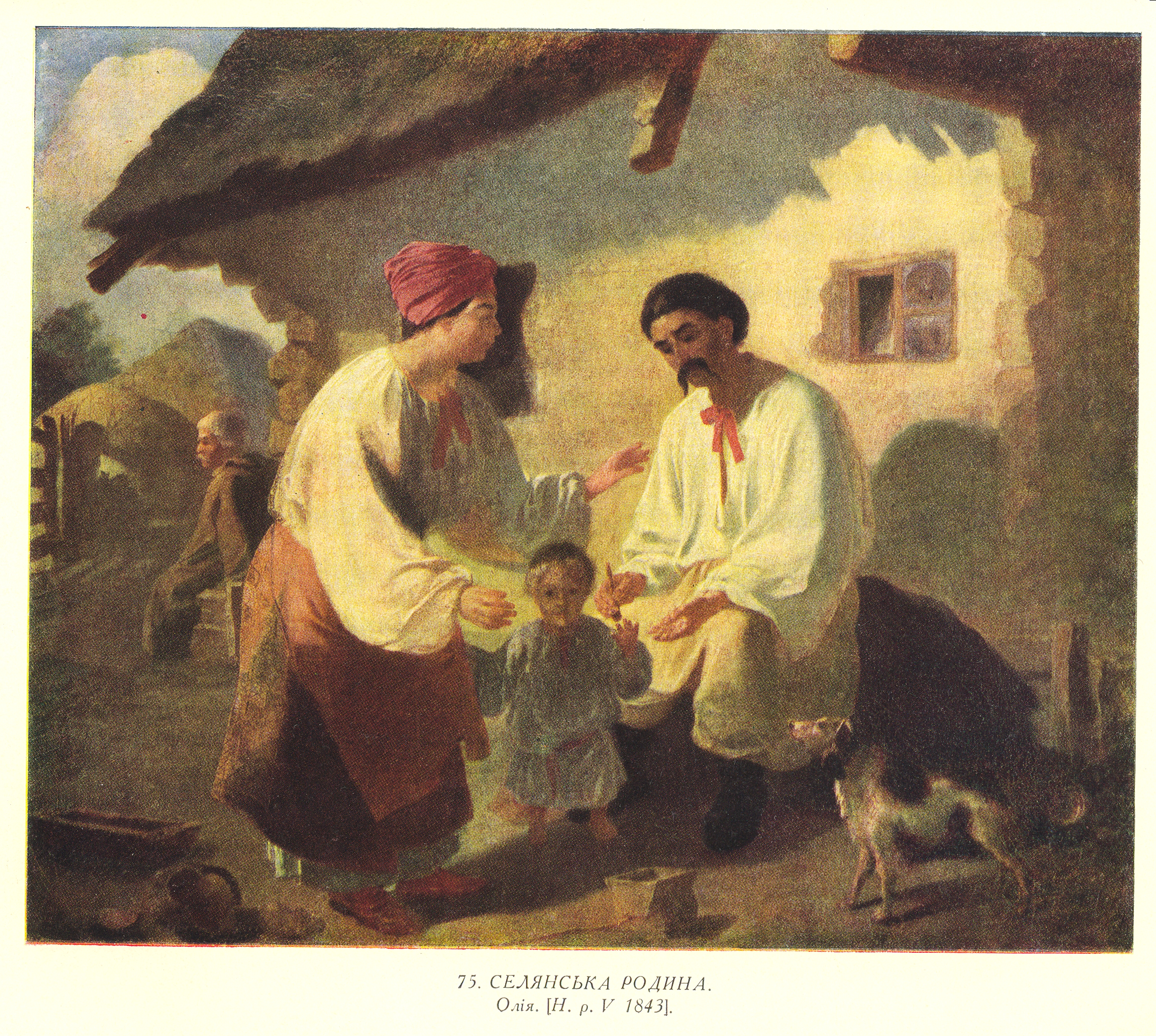
Ukrainian Peasant Family. Painting by Taras Shevchenko, 1845

According to my Great Aunt Katherine Rychly Pylatiuk, my grandmother's family were once serfs.  There is a good chance that my other ancestors were serfs as well, but I don't have that information.
The Rychly family were farmers, living in Galicia, part of the Austrian Empire,  just outside the city of  Ternopil' in a village named Bila, (sometimes spelled Biala). Katherine said that her mother, Maria Bryniak Rychly repeated stories her mother,  Barbara Steciuk Bryniak, told her about the time when peasants were required to work on the landlord's land. Maria was born in 1873, so her mother was born in the early 1850's,  shortly after Austrian serfs were emancipated.  She called the practice of working on the landlord's land the "pansjchyna."The peasants were required to work on his land 3 days a week, and the rest of the time, they worked their own farms.  On Sunday, no work was done, so that left 3 days for peasants to work for themselves.


Serfdom in the Polish-Lithuanian Commonwealth and later in the Austrian Empire, and serfdom in Russia was similar to serfdom in Western Europe, but there were important differences.

What are serfs and what is serfdom?

The answer to this question has several answers, depending on the time and place where is was practiced.  The word serf comes from the Latin word servus meaning service.  In Old French the word serf meant slave.
A serf was a member of a servile feudal class who was bound to the land and was subject to the will of the owner.
In Europe serfdom was the status of many peasants/farmers under feudalism.

Serfdom in Medieval Europe 

Serfdom in the middle ages existed in Western Europe.  Serfs were the lowest class in society, and lived and worked on land owned by another person, usually a knight who was the vassal of a higher  ranked and more powerful noble.  The system was based on mutual obligations and contracts between the lord and his vassals.  In theory, the king owned the land, but since he couldn't directly rule land that was far away, he gave tracts of land to loyal nobles in exchange for  their loyalty and military service. Serfs were bound to the land, and if they tried to run away, they were returned to their lord.  They could become free if they managed to stay away for a "year and a day" or if they were granted freedom by their lord. The lords then gave smaller tracts (manors) to knights in their service, who ran the manors and ruled the serfs that lived on that land. Knights were required to protect the serfs in times of trouble.  In exchange, the serfs were required to give part of their crop to the knight(lord) and work on his roads and building projects This practice, the  corvee, lasted much longer than serfdom,  in France, it was still in existence in the 18th century.  Serfs were also required to serve the lord as soldiers if necessary.  Loyalty and mutual obligation was key in feudal Medieval Europe.
In Western Europe, serfdom died out in the fourteenth century, when the Bubonic plague, known as the Black Death killed thousands in Europe: royals, nobles, gentry and serfs.  The labor shortage caused by the plague made serfdom obsolete and it gradually died out.

Serfdom in Eastern Europe

Serfdom came to Eastern Europe much later than to Western Europe. Serfdom no longer existed in Western Europe when it developed in the East. It appeared last and disappeared last in Poland and Russia.  It was not as a result of or connected in any way with Feudalism as practiced in Western Europe.

Poland and Lithuania 1549

The Polish-Lithuanian Commonwealth

In the Polish-Lithuanian Commonwealth, the king was elected by the nobles. The king did not rule his subjects directly. The land was divided into estates, controlled by noble families. Not only did the nobles own the estates, they often owned the towns. The nobles ruled the people who lived on their estates.  Since the nobles controlled the political system and chose the king, they could raise demands on the peasants at will.  
Peasants became serfs during the late 15th century.  Originally, peasants living on an estate, paid the landlord rent for the use of the land, and were required to work the nobles' land as a way of paying the rent.  They were entitled to a small plot of land and were able to sell what ever they produced.   Peasants living on the estates were  also required to work on the noble's roads, (the corvee), a specific number of days a week. Historian Orest Subtelny said "As nobility's fortunes rose, those of the peasants declined." (History of Ukraine p. 90). 
In 1505, the Sejm, the governing body of nobles who ruled the Commonwealth, forbid peasants from leaving their village without the lord's permission.   Serfdom became law in 1557 when the Voloky Ustov was passed by the Sejm. The peasants right to own land was no longer legally recognized.  Since there was no strong central government, landlords were able to extract more and more from the peasants. Peasants could no longer run their own communities, nobles had the right to judge them and  to control  many aspects of their lives. They were now serfs, no better off than slaves. Serfdom was most prevalent in Galicia and Volhynia, but the Polish-Lithuanian Commonwealth was large, and where labor was scarce, in the Eastern parts of the Commonwealth,  serfdom was rare or unknown.


Where population was low and labor scarce, serfdom was unknown.


Russia


Moscovy during the reign of Peter the Great, when serfdom was established. Source: Riasanovsky, History of Russia, 1963


Serfdom became law in Russia in 1649, but it existed long before that date.  Its foundations were build long before the Muscovite period and long before Russia came into existence.   Serfdom was the mainstay of Muscovite agriculture. It was most common in the southern, southeastern and western section of Russia, east of the Dniepr River.  By beginning of the 17th century, serfs could not leave their landowner's estates for any reason.  By the time the Ulozhenie of 1649 was passed, serfdom was firmly established.  This decree conformed the idea of "once a serf, always a serf."
Landowners were the judicial and police authority on their estates. and the serfs were at their mercy.
The landlords were members of the upper classes of Russia, and most were members of the nobility.   Eventually, serfs could be bought and sold and willed by their owners. By the end of the 17th century they were virtually slaves. 
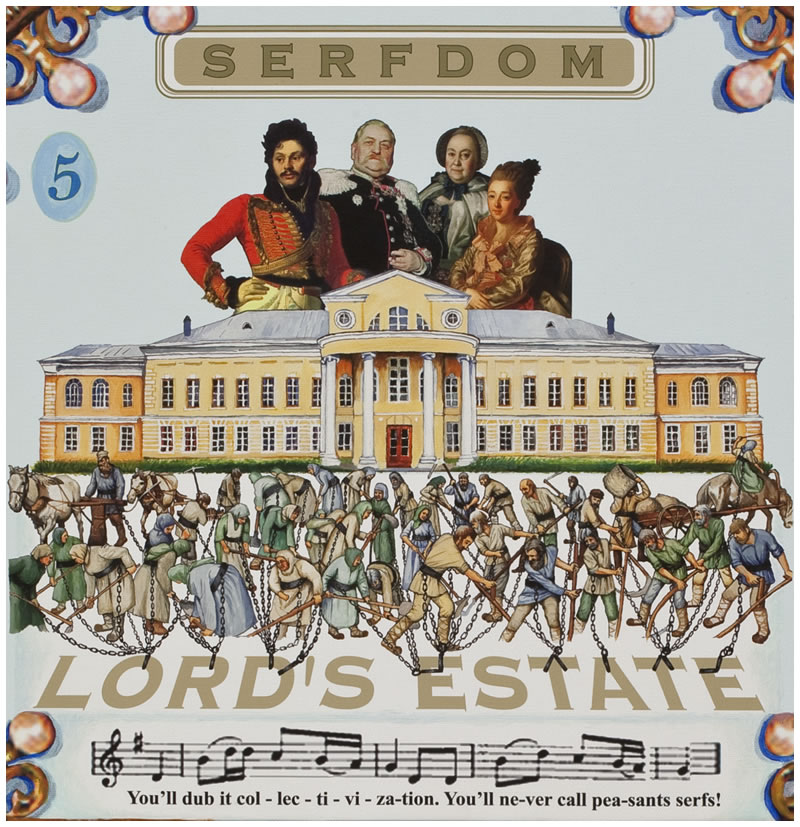
Serfdom was extended and strengthened during the reign of Catherine the Great (1762-1796). The practice spread to new areas, particularly to the lands acquired in the Partitions of Poland.  A series of laws passed between 1763-83 made serfs the most oppressed people in the Russian Empire.  These laws made it possible to control all aspects of a serf's life and gave landowners to right to sell entire serf families as well as individual serfs.
By 1796, 53% of all Russian peasants were serfs and 49% of the population of Russia were serfs.

In the next blog post, I will continue with the subject of serfdom in Eastern Europe, concentrating on more of the details of the lives of serfs.


Sources:
Internet Encyclopedia of Ukraine, encyclopediaofukraine.com
Doroshenko, Demeter, History of the Ukraine, Edmonton, 1939.

Plokyi, Serhii, The Gates of Europe, New York, 2015.
Riasonovsky, Nicholas, A History of Russia, New York, 1963.
Subtelny, Orest, Ukraine, A History, Toronto, 1988.

Friday, January 1, 2016

Celebrating Ukrainian Christmas


Christmas card sent to my grandmother in 1939.


Christmas postcard from my Grandparents' collection


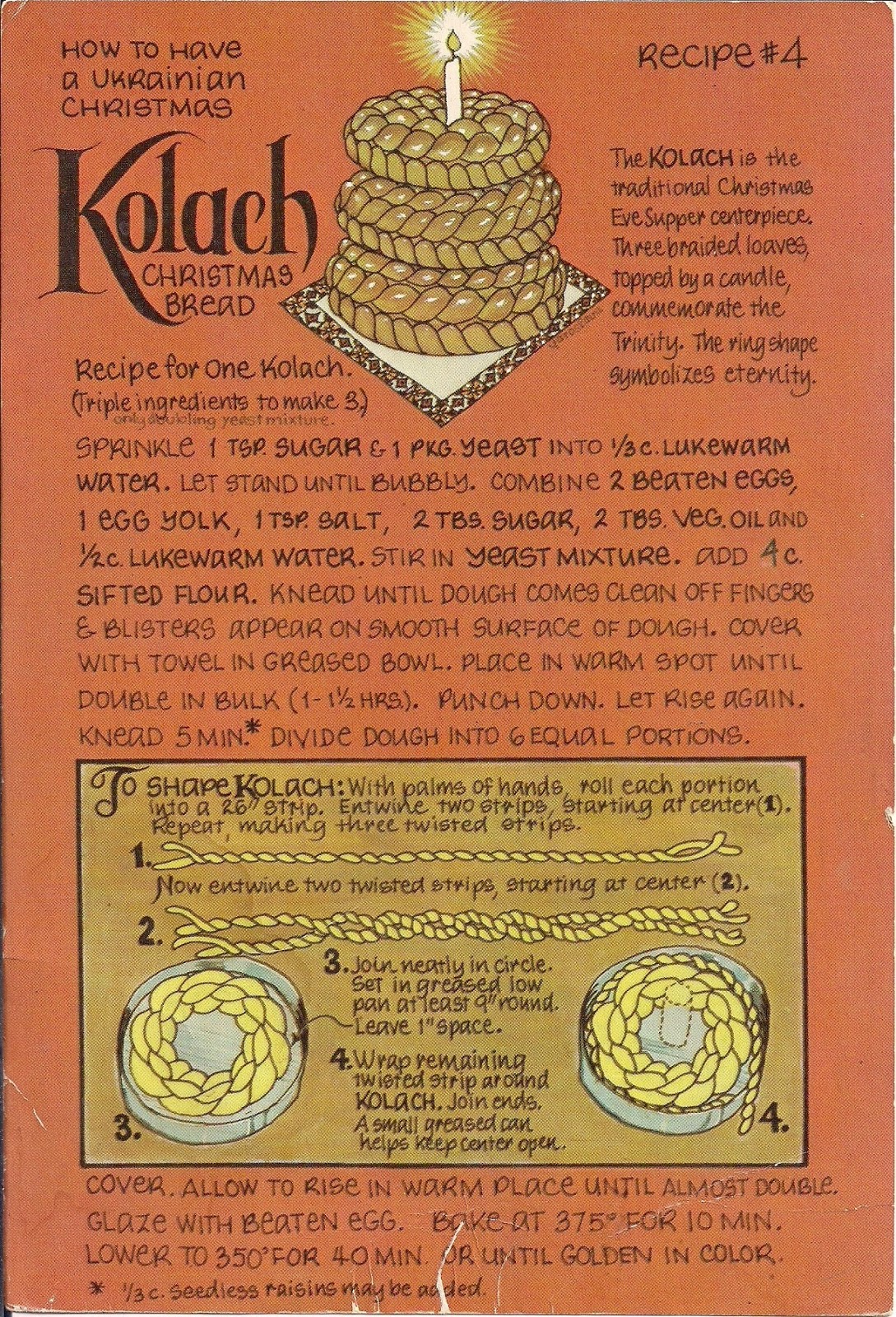
Many Ukrainian people celebrate Christmas on January 7, according to the Julian calendar. The holiday begins with a dinner on Christmas eve, January 6.  The traditional dinner is made up of 12  meatless courses.  The meal started out with Kutia, a pudding made from wheat and include borscht, pickled herring, freshwater fish, holubtsi (cabbage rolls), vareneky, kolach, a three layer bread, pumpushki (jelly donuts) and honey cake and other pastries.
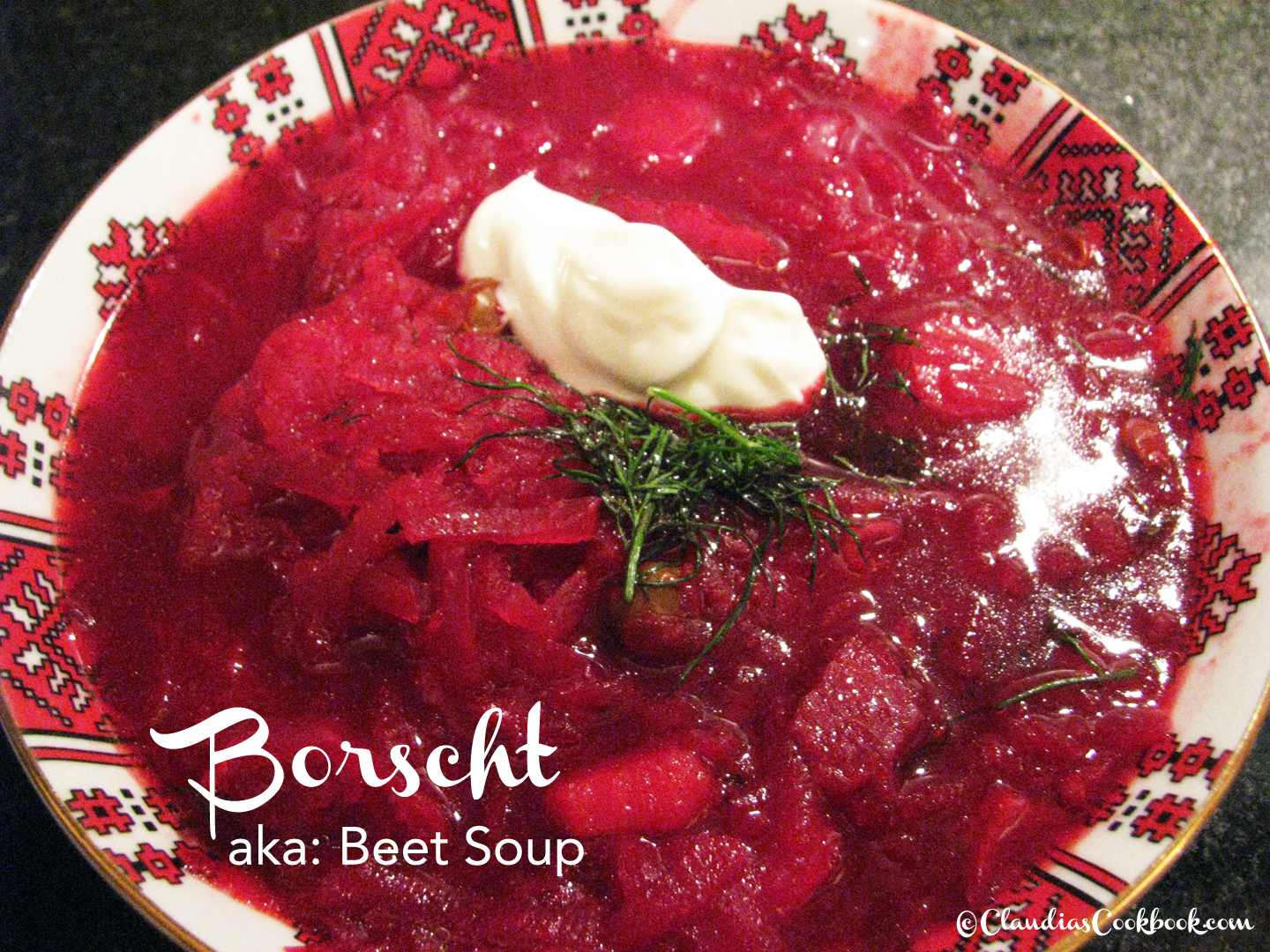
I am including my personal recipe for Ukrainian style Borscht, which is vegetarian and can be served on Ukrainian Christmas Eve. Check out the recipes from Yaroslava Surmach Mills on the postcards below.

Photo source: Claudia's Cookbook
BORSCHT, UKRAINIAN STYLE.


You will need a large saucepan or stockpot.


Ingredients:

1 tbsp vegetable oil

1 bunch beets with stems and leaves.

4 cups vegetable broth (I like Pacific brand)

1 large onion, chopped

1 clove garlic, finely chopped

1-2 small potatoes, peeled and cut into quarters

1-2 stalks celery, trimmed and chopped

1-2 carrots, peeled and sliced

Chopped greens and stems from the beets.

1 package fresh spinach or one bunch of Swiss chard, washed and coarsely chopped, include stems

1 large can diced fire roasted tomatoes

1 large can low sodium tomato juice

1 tsp dried dill (optional)

Fresh dill weed, chopped

Sour cream or Greek yoghurt
salt and pepper

Directions:

1.     Cut stems and leaves off the beet roots, don’t throw them out.

2.     Soak the beet leaves and stems and rinse twice to remove any sand. Discard any tough leaves.

3.     Wash and peel beet root and chop into cubes.

4.     Heat vegetable oil in a large saucepan or stock  pot.

5.     Add onions and garlic and cook until transparent

6.     Add celery and carrots to vegetables in the pan, cook for about 5 minutes

7.     Add broth, tomato juice, tomatoes, beets and potatoes bring to a boil, then and turn down heat and simmer for about 30-40 minutes or until vegetables are tender.

8.     Add beet greens and spinach. Simmer until greens are cooked down, about 10 to 15 minutes.

9.     Optional--Add dried dill to soup. 

10.  Add salt and pepper to taste.

11.   Serve with a spoonful of sour cream or Greek yogurt.  Sprinkle dill weed on sour cream.


Check out the link to learn about celebrating Ukrainian Christmas.
More about Ukrainian Christmas

Postcard and recipe by Yaroslava Surmach Mills

Postcard and recipe by Yaraslava Surmach Mills


Saturday, December 19, 2015

Yum Yum Christmas!

Christmas is coming and everybody wants a new recipe for a delicious dish.  I have a couple of good ones for you--I have made both of them, and they are really good.
The first is a gingerbread cake that is out of this world.  I found it in the New York Times last month and made it for Thanksgiving.  It was a big hit, and I made it again.  Again it was great.


Sticky Cranberry Gingerbread

  • Time1 1/2 hours plus cooling
  • Yield8 to 10 servings

Photo:  Andrew Scrivani for The New York Times 


Ingredients

  • 2 cups/8 ounces/266 grams fresh or frozen cranberries
  • 1 cup/200 grams granulated sugar
  • 1 stick/4 ounces/113 grams unsalted butter
  • cup/133 grams dark brown sugar
  • ½ cup/120 milliliters whole milk
  • ½ cup/120 milliliters maple syrup
  • ¼ cup/60 milliliters molasses
  • 1 ½ cups/185 grams all-purpose flour
  • 1 tablespoon/5 grams ground ginger
  • ½ teaspoon/1 gram ground cinnamon
  • ½ teaspoon/3 grams baking powder
  • ½ teaspoon/3 grams kosher salt
  • ¼ teaspoon/1 gram baking soda
  • ¼ teaspoon black pepper
  • 2 large eggs, lightly beaten
  • 1 tablespoon/14 grams grated fresh ginger (from 1-inch piece)

Preparation

  1. Heat oven to 350 degrees and line a 9-inch square or round baking pan with parchment.
  2. In a small, heavy-bottomed saucepan, stir together cranberries, granulated sugar and 1 tablespoon water. Stir the cranberries over medium heat until the sugar is completely dissolved and cranberries form a sauce that is syrupy and bubbling thickly, about 10 minutes. Aim to have about half the cranberries broken down, with the remainder more or less whole.
  3. In a separate saucepan, stir together the butter, brown sugar, milk, maple syrup and molasses over medium heat. Bring it to just barely a simmer and then remove it from the heat. Do not let it come to a boil, or the mixture may curdle.
  4. In a large bowl, sift together the flour, ginger, cinnamon, baking powder, salt, baking soda and black pepper. Beat in the butter-maple syrup mixture and then beat in the eggs. Stir in the ginger.
  5. Scrape the batter into the pan. Drop fat dollops of cranberry sauce onto the surface of the cake batter. Drag a long, slender knife through the batter in a swirly design, as if you are marbling a cake. Transfer the cake to the oven and bake it until the top is firm and a toothpick inserted in the center comes out clean, about 50 minutes. Transfer the pan to a wire baking rack and let the cake cool completely before eating it.
One note:  It was suggested in the comments that a 9 inch spring form pan, instead of the 9x9 inch square pan would work well in this recipe.  I tried it, and liked the cake better baked in the spring form pan.
 
 
CHOCOLATE ALMOND SHORTBREAD

Chocolate almond shortbread
The second recipe of from the Chicago Tribune, and is for chocolate almond shortbread.  Another winner, in fact this recipe won  second prize in the Chicago Tribune Cookie contest in 2012. I found that these cookies are easy to make and come out crisp and delicious.  I chose to make the cookies using a star shape cookie cutter.

Chocolate almond shortbread
Second place: Betty Koenig
Prep: 45 minutes
Chill: 30 minutes
Bake: 20 minutes
Makes: 4 dozen cookies
"I love that they're not too sweet, and they seem like they'd be a really good dunker," Angel Food Bakery owner and pastry chef Stephanie Samuels says of Betty Koenig's chocolate almond shortbread cookies. In testing, we found the dough rolled out better when chilled for at least 30 minutes.

Ingredients
4 sticks (1 pound) unsalted butter, softened
1 cup sugar
1 1/2 teaspoons vanilla
1/2 teaspoon salt
3 cups flour
1 cup Dutch process unsweetened cocoa powder
1 cup almond meal or very finely ground unblanched almonds
4 sticks (1 pound) unsalted butter, softened
1 cup sugar
1 1/2 teaspoons vanilla
1/2 teaspoon salt
3 cups flour
1 cup Dutch process unsweetened cocoa powder
1 cup almond meal or very finely ground unblanched almonds

Preparation
1. Heat oven to 325 degrees. Cream butter and sugar in a large bowl with an electric mixer or in a stand mixer. Add the vanilla and salt; beat or mix to blend. On low speed, add the flour, cocoa and almond meal, mixing well.

2. Divide into 3 pieces; wrap in plastic wrap and chill, 30 minutes. Roll out dough, one piece at a time, on a lightly floured surface to about 1/4-inch thick. Cut with cookie cutters; transfer to parchment-lined cookie sheet. Repeat with remaining dough.

3. Bake, in batches if necessary, until slightly firm to the touch, about 20 minutes. Cool on racks. Store in airtight containers. Can be frozen for months.

Nutrition information per serving: 133 calories, 9 g fat, 5 g saturated fat, 20 mg cholesterol, 12 g carbohydrates, 2 g protein, 26 mg sodium, 1 g fiber

Monday, December 7, 2015

Where Were You on December 7, 1941?

Today is the 74th  anniversary of the attack on Pearl Harbor by the Japanese, an event which brought the United States into World War 2.  This event changed profoundly changed the lives of all Americans.

Where was I?  I wasn't born until 1946,  but my parents were adults, their answers to the question were:
My father was at home recovering from a hangover--he attended a party at the University of Minnesota Graduate Students Club the night before.
My mother was at church, where she was every Sunday.
My in-laws had been married since October, 1941, my father-in-law was at a Chicago Bears Football Game, held in those days at Wrigley Field in Chicago.
My mother-in-law was at home.


To people in my generation--the  life changing event was the assassination of President Kennedy.  The question for us was "Where were you when President Kennedy was assassinated?"
I was visiting a college in Pittsburgh, PA.  I thought it was a joke--for a few seconds.
My husband was in a class at school, the students in his class had the same reaction as I did.

To young adults, the life-changing event was 911 and the question is "Where were you when you heard about 911?"
I was teaching a class at school, another teacher came in and told me what happened.  I turned my radio on, and the story was confirmed.  My lesson plan was trashed and we spent the rest of the class listening to the radio.

Saturday, December 5, 2015

Yum Yum Hanukkah


Hanukkah begins at sunset Sunday December 6, 2015.  Hanukkah, like other Jewish holidays involves celebrating with family and eating special  holiday foods.
In the United States, it is favorite holiday of many Jews for many reasons; the fun, the  giving of gifts and the food.

Although it is a minor holiday in the Jewish calendar, it has become a very important Jewish holiday in the United States.  Hanukkah is a happy holiday, commemorating an historical event, the rededication of the Temple in Jerusalem in 168 B.C.E.  The Syrian king Antiocchus Epiphanes sent soldiers to Jerusalem, abolished Judaism, giving Jews  the choice: convert or die. On the 25 day of the month of Kislev, a group of Jews, led by the Maccabees family, although greatly outnumbered, defeated Antiochus's army in two decisive battles.  Now that the Jewish people controlled Jerusalem again, they proceeded to rededicate the Temple.  The ner tamid, the eternal light, was rekindled, using oil from the only remaining jar of oil.  Normally, a jar of oil lasts for only one day, but this jar lasted for eight.
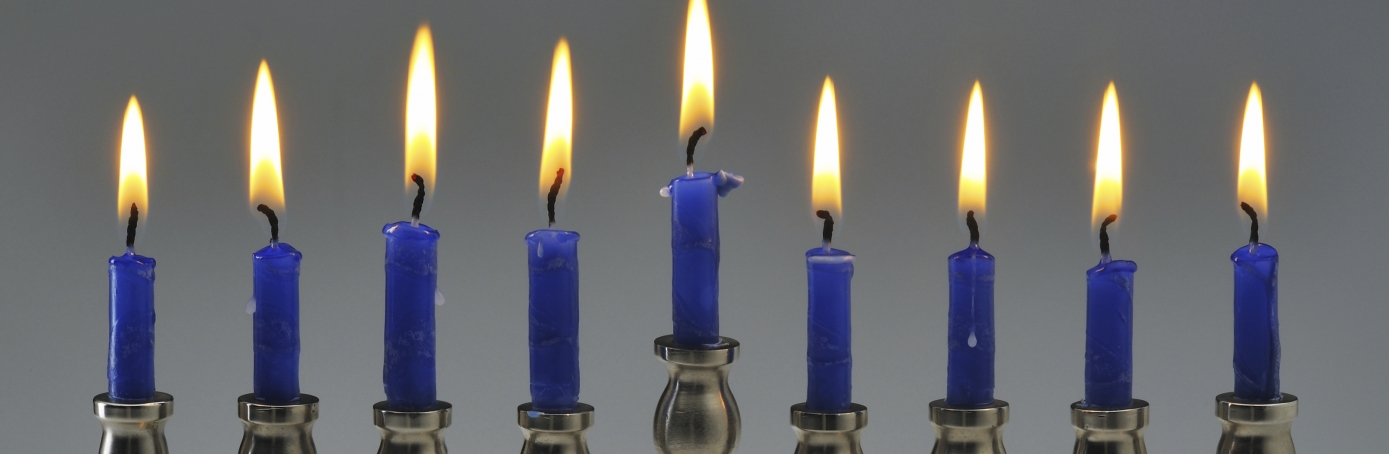
The holiday lasts for eight days  and is centered around lighting the Hanukkiah, a candelabra with eight branches and a shamash, the candle used to light the others.  Special foods are served and gifts are exchanged.  Many of the foods are cooked in oil, a way to remember the miraculous oil that lasted for eight days.

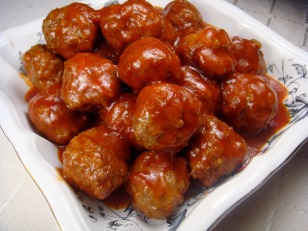
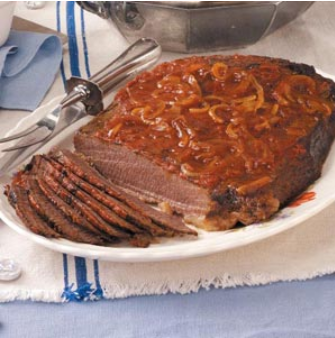
In my family, three foods are always served: brisket, latkes and sweet and sour meatballs.  I am sharing the family recipes for two of these delicious dishes, sweet and sour meatballs and brisket.
My sister-in-law, Sheila helped me write out the recipes, since the cooks in the family prepared these foods from memory.


Sheila’s Sweet and Sour Meatballs.

A delicious appetizer for Hanukkah or any holiday.

Ingredients
Meatballs
2 pounds lean ground beef
2 eggs
½ tsp dried garlic powder
½ cup matzo meal
1 ½ to 2 cups water

Sauce
2 8 oz cans tomato sauce
½ onion, chopped
1 C. brown sugar
2 tbsp. lemon juice
1/4 to ½ tsp sour salt (citric acid)*Add this to taste, since it is very sour.
salt and pepper

1.     In a large bowl, mix ground beef, eggs, garlic powder, salt and pepper and matzo meal together, until combined.  You should be able to roll a small ball from the meat mixture—if not, add more matzo meal until the meatballs hold together.
2.     Roll the meat mixture into small balls and set aside.
3.     Add about 1 ½ cups water to a 4 quart pot.
4.     Add onions and tomato sauce. 
5.     Heat until the mixture comes to a low boil
6.     Drop the meatballs into the water. Some may fall apart, this adds to the flavor of the sauce.
7.     Simmer the meatballs in the sauce for 5-10 minutes
8.     Add the brown sugar, lemon juice and sour salt.
9.     Continue to simmer for 10 more minutes on a low heat.
10.  Taste the sauce and add salt and pepper to taste.

Sour Salt can be found in Kosher grocery stores, or in grocery stores that sell kosher foods. It is also available online from The Spice House.com


Tasty and Easy Beef Brisket
Ingredients:
1 3-4 pound beef brisket, flat cut with extra fat trimmed off. You can ask the butcher to do this for you.
1 bottle Heinz Chili Sauce
1 onion chopped
1 bottle beer, any kind. You can use red wine in place of the beer.

Preheat oven to 325 degrees.
  1. Heat a large frying pan and brown the brisket on both sides, about 3-5 minutes.
  2. Remove the brisket and put in a roasting pan.
  3. Cover the brisket with the chopped onion.
  4. Pour the entire bottle of chili sauce over the brisket.
  5. Add the beer to the pan.
  6. Cover the pan with aluminum foil, making sure that you have a good seal.
  7. Put into preheated oven and bake for about 2 1⁄2- 3 hours until tender. Stick it with a
    fork to test for tenderness.
  8. Remove the pan from the oven, and let the meat rest for about 10 minutes. The meat
    should be very tender, almost to the point of falling apart.
  9. Save the pan sauce, separate the fat from the sauce, discarding the fat. Add salt and
    pepper to sauce to taste. Keep the sauce warm in a small sauce pan.
  10. Slice the brisket against the grain.
  11. Serve the meat with the sauce.

Friday, November 13, 2015

World War One Memorials in Chicago: The Elks National Memorial


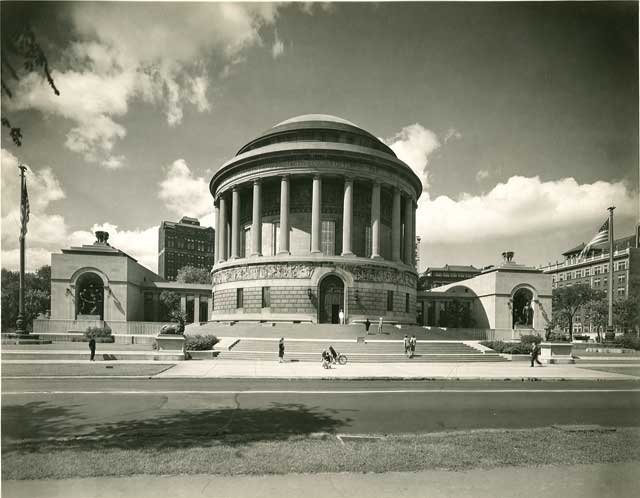
The Elks Memorial in 1926, the year of its dedication.


One of the most magnificent war memorials in the United States is the Elks National Memorial in Chicago, Illinois. The domed building was built by the Benevolent and Protective Order of Elks, an organization committed to providing charitable services and building stronger communities. It is located across the street from Lincoln Park and a short distance from Lake Michigan.


The building, dedicated in 1926 is a "Tribute to the bravery, loyalty and dedication of the thousands of Elks who have fought and died for our country."


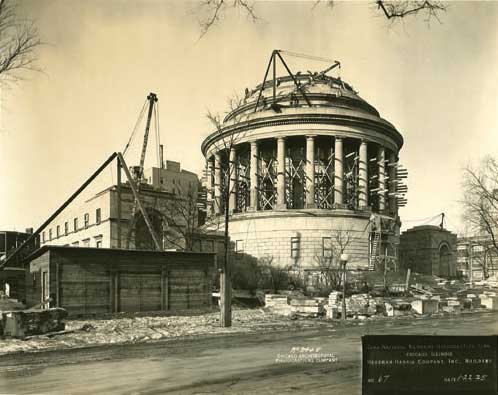
After World War One, there was a strong desire on the part of Elks members to build a memorial to members who died in the Great War.  In 1920, the Grand Lodge of the Elks med to plan and design the monument.  They decided to hold a competition to select an architect to design the monument.  Edgerton Swarthout, a New York architect was the winner.  Construction was begun in 1923 and the building War was dedicated on July 14, 1926 to the "memory of the more than 1,000 Elks who lost their lives in World War One."


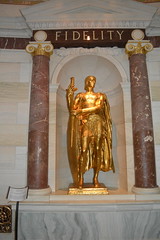
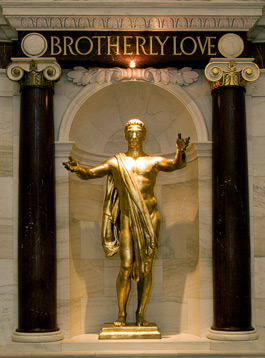
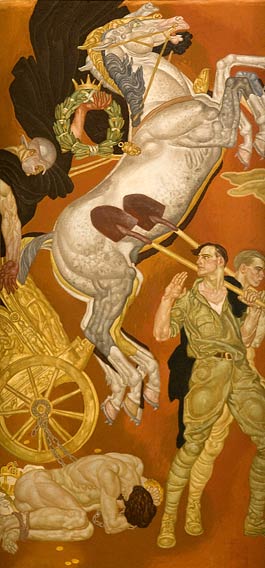
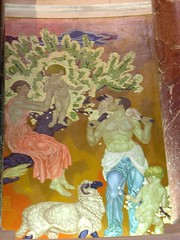
The beaux arts style domed building was built from marble,  granite and limestone, with sculptures and paintings decorating the interior. The art works were inspired by the Four Cardinal Virtues of the Elks, charity, justice, brotherly love and fidelity. The scupltures are by Adolph Weinman, James Earle Fraser and Laura Gardin Fraser. Paintings and murals are by Edwin Blashfield and Eugene Savage.

Brotherly Love and Fidelity are two of the Four Cardinal Virtues of the Elks.

Inside the Memorial Rotunda of the Elks Memorial. Sculptures representing the Four Cardinal Virtues of the Elks are on the first level, 12 allegorical murals illustrating The Beatitudes by Edward Savage  are on the second level.

"They Shall Inherit the Earth"
"Theirs is the Kingdom of Heaven"
"They Shall Obtain Mercy"

"They Shall See God"

The Grand Reception Room  
"The Armistice", painting in the Grand Reception Room
'Paths of Peace" in the Grand Reception Room


The building was rededicated in 1946 after World War 2 , and 1976 in memory of Korean War and Viet Nam War members.  It is also the national headquarter of the Elks.


Friday, November 6, 2015

The Kristallnacht: One Boy's Story revisited.

Monday, November 9 is the seventy-seventh anniversary of Kristallnacht, the beginning of the Holocaust.  This post is in remembrance of the night that changed life for Jews in Germany and Europe.


Late in the afternoon in Trier Germany,  November 9, 1938, there was a bang on the door on the Klepper home.  Outside were 5-6 young men in their late teens and early twenties who pushed Otille Klepper aside and barged in. Her husband wasn't home, she was with her small son and their maid Anna.   The men were armed with large sticks and tire irons.  As they pushed past Frau Klepper, they hit the mirror of the hall tree, just inside the front door and shattered it.  Frau Klepper grabbed her five year old son, Manfred and ran out the back door, down the stairs and into the cellar.  They were joined by Anna and the upstairs neighbors. Otille locked the cellar door from the inside, and waited.

The Klepper family about 1934.   Otille, Manfrred, Charlotte and Moritz.

Kristallnacht, November 9 and 10, 1938, the night of the broken glass, marked the beginning of the Holocaust.  On the night of November 9, gangs of young men broke into and destroyed the homes of Jewish families all over Germany. On November 10, Jewish Temples and businesses were destroyed.


Manfred,  known today as Manny, heard the furniture being thrown around and glass breaking in their home for what seemed like hours.  The noise let up for a few minutes then the gang went up the stairs and destroyed the neighbor's home.  After about 40-45 minutes, the noise stopped.    Frau Klepper and her neighbor unlocked the door and went upstairs.  When they entered the Klepper home, she exclaimed, "Our place is a total disaster and so is our neighbors."    The floor was covered with broken glass and dishes, not a single dish was left.  Their dining room  buffet had glass doors, which were shattered, the drawers were pulled out and the silverware was dumped on the floor.   The furniture was broken, the beds were ripped apart, Glass shelves in the bedroom were torn down and the china and glass figurines were thrown on the floor and smashed to pieces. Nothing  was usable. The Klepper home was uninhabitable.

Shortly after the noise stopped, there was a knock on the back door. Mrs Klepper slowly opened the door and saw four nuns from the Convent behind the Klepper's home. As she let them in, they said that they had heard the noise, and wondered what happened. They took a look around and left. Soon  four more nuns came in with brooms, shovels and buckets.  Manny's mother, her neighbor and the nuns began to clean up the mess.  It took them all night and part of the next day to clear out the debris from the two homes.  Manny and the neighbor children stayed in the cellar while the cleanup was taking place.  When the  two places were cleaned up, the nuns brought  food and new dishes for the families.

Trier is one of the oldest cities in Europe. The Porta Negra is an ancient Roman building in Trier.

Manfred Klepper,  Manny, as he is known today, was born in Trier on November 18, 1931.  He lived with his family Mering, a small village outside of Trier, where they owned a general store. Most of his family was in the farming business, one side of the family raised cattle, the other side owned vineyards. 
In 1937, Manny and his parents moved into to Trier. They lost their business to the Nazis, so they moved in with the grandparents. Since the Nazi party and Hitler took control of Germany in 1933, life for the Jews became difficult.  There were boycotts of Jewish businesses and Jewish people were continually harassed.  In 1937, a large Nazi Rally was held in Trier making their  situation more and more dangerous.   The Kleppers had relatives in the United States, so they decided to  leave  Germany and come to America.  But US foreign policy made it difficult for Jews to get permission to immigrate and it often took a long time to get the paper work together.  Manny's grandparents' and sister's papers came through first, and they left Germany in 1938.

Nazi Rally in Trier, 1937
Manny Klepper is my brother-in-law.  He frequently  speaks about his Kristallnacht experiences  in  Lousiana.  His story continues in my next blog entry: After the Kristallnacht