Showing posts with label Szczuczyn. Show all posts

Friday, October 10, 2014

World War One in Russian Poland: Fredja JozefsonBernstein's Story

Russian World War One poster, Russia bringing peace to Europe


At the beginning of World War One, both the Russians, and the Austrian and German allies had plans for a reunited Poland under either Russian or Austrian rule. The Austrian/German alliance envisioned a new Poland uniting Austrian Galicia with Russian Poland. They planned to bring in a member of the Austrian royal family as king of Poland.   Both the Russians and the Germans looked at a new Polish nation as a possible military zone in future wars thus protecting their respective homelands. The Austrian/Germans appealed to the Poles under the Tsar's rule to fight for freedom, and independence from Russian rule. They hoped to expand Poland to the east. The Russian appeal to the Poles, issued by Grand Duke Nicholas on August 15, 1914, mentions 150 years of German rule in Poland.  He stated that Poland's soul is not dead and hoped that the German and Austrian controlled sections of Poland could be joined to Russian Poland and aligned with Russia under the rule of Tsar.

 
Europe in 1815, after the Congress of Vienna.  Much of Poland was absorbed into Russia, including the Capital, Warsaw. In 1870, Germany was created merging Prussia and smaller German speaking states (indicated in Yellow on this map.)

In August 1914, the Russians invaded Austrian Galicia and German ruled Poland.  They were successful in Galicia and controlled it for 2 years, but suffered terrible defeats by the Germans in northern Poland, losing The Battle of Tannenberg and the Masurian Lakes.  Their path of the invasion crossed northern Poland and affected the people of Szczuczyn, where many members of my husband’s family lived.  Although I do not have any stories from his family members, I do have the memoir of Fay Jozefson Bernstein, who like my great aunt Katherine who lived in Galicia, lived in a battle zone. Fay's memoir, written by David Bernstein, is published on the Szczuczyn site. To read Fay's memoir, click on this link: www.szczuczyn.com/jozefson.htm


Fay Jozefson Bernstein was born Frejda Jozefson in Szczuczyn in January 1905.  Her father, Schmuel Jozefson, an ordained rabbi died when she was six months old, leaving his wife, Hinda, and five daughters.   In order to support her family, Hinda opened a grocery store, which served the neighborhood as well as the Polish farmers who came to town on market days.  Fay’s mother believed in education, she was educated and she made sure that her daughters had educations.  Although she was poor, she was charitable; Fay remembers leaving packages of food on the doorsteps of poor members of the Jewish community. In Szczuczyn there was a Yeshiva, a religious school which trained rabbis. Families in town took in students for meals, and Hinda took her turn providing food for the students, often going without food herself.

Szczuczyn is located at the lower right quarter of the map.  The Russian Army is blue, the German is red.


Szczcuzyn was less than a mile from the Polish-German border, in the area of Poland ruled by Russia.  In August 1914, the Russians invaded Germany, and soldiers marched through the town.  Since the Russians lost the Battle of Tannenberg, there was fighting in the Szczuczyn area as they retreated.  Fay tells about the first incident that affected her family in Szczuczyn.   

The German and Russian armies were shelling each other, the people of the neighborhood were running, but didn’t know where to go.  The neighbors told them to leave everything behind and run.  They followed the crowd and came to a building with a basement and a metal roof.  The Jozefons hid in the basement for almost two weeks.  It was crowded with people, women, children and crying babies.  There was no water, and only bread and raw potatoes to eat.  When the shooting stopped, they left and returned to their home. Their home was full of bullet holes, and many possessions were gone. The Germans were gone, but they weren’t gone for long.

Russian Troops retreating after the Battle of Tannenberg


Several months later, in December 1914, the Germans returned.  Jews were warned to leave immediately since the Germans believed that Jews were Russian spies, and would kill them.  Fay could see people running, but she had no idea where they were going.  The husband of Fay’s mother’s friend had a horse and wagon, and she begged them to take Fay. They agreed to take her and Fay climbed in and hid under blankets with the rest of their family. She didn’t realize until later that her mother and sister were not in the wagon.  They traveled for a while and came to a house with a windmill near a forest.  The owner of the farm hid the family, as well as many other people.  He had an orchard, and provided the people with fruit to eat.  Again they were crowded together in darkness.  They could make no noise, since they could knew the soldiers outside would hear them and would shoot and kill them.
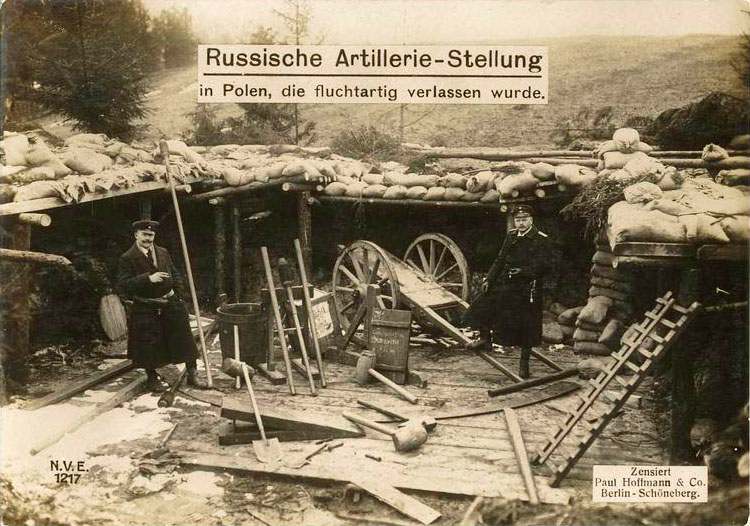
German soldiers in a captured Russian artillery station, World War 1

Three weeks later, the shooting stopped. After a few days of quiet, Fay begged the man with the wagon to take her back to Szczuczyn so she could find her mother and sister and finally he agreed.  They rode into town and Fay got out of the wagon, looked into her house and found it was riddled with bullets, the windows broken and the house empty. Her mother and sister were gone.  As she ran back to the wagon, soldiers appeared and started to shoot at them.  The man beat his horse as they galloped away, shouted at Fay, saying that he was risking his life trying to help her.  They returned to the farm and went into hiding again.

After three  more weeks, her mother and sister were found in a nearby village.  The soldiers had retreated and the Jozefson family returned to Szczuczyn.  Their house and store had been looted and was empty.  Hinda reopened the grocery store, and was hopeful that things would improve. Although the border was calm, the Jewish people of Szczuczyn were still afraid.  They kept their homes completely dark at night, and slept in their clothes, just in case.
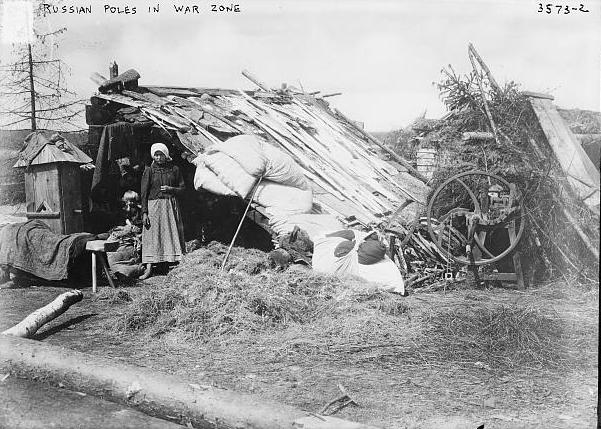
  

Temporary shelter constructed by Polish refugees.

Friday, February 14, 2014

A Big Breakthough in the Monkovski Family Tree.


Genealogy research can be very tedious.  A lot of time is spent going through lists of people who lived long ago, trying to find your ancestor. The search can be complicated by inaccurate records, unfamiliar spellings of names, and a lot of dead ends.


This week I had none of those problems.  I put aside writing about the Monkovski family, thinking that the information I had was all there was available at this time.  Well, I was wrong.  Jose Gutstein of the Szczuczyn Web site, came through again. 


Jose has been helping an Israeli family with their family tree, and he discovered that that family had the same picture of the Chiam Pesach Monkovski family I had (without the crack down the middle.)  He supplied me with information identifying some of the people in the picture.  I heard from family stories that some Monkovski relatives immigrated to Israel, but that was all I knew.

My picture of Chiam Pesach Monkovski's family with the crack.

The Israeli Family's picture of the Monkovskis


It turns out that one of Chiam Pesach’s sons, Yoseph, did immigrate to Israel, but first immigrated to Cuba in 1929.   Two of his daughters are still living in the Tel Aviv area. Then I found out that some members of the Monkovski family immigrated to Argentina, and about 10 years ago, visited the Israeli branch.


Now there is another mystery.  The family in Israel has this family picture, and nobody has any idea who they were.  One of my husband's cousins sent me this postcard that was in some of her father’s things.  Is she the girl with the white beads in the back row?  Perhaps the message on the back, written in Yiddish will provide the answer.


Is the girl in the center of the top row in the picture to the right?
This picture belongs to the  family in Israel.  Nobody knows who they are.


Message on the back of the picture above. Wasosz, 1929.  To my sister, from Abraham.


So, don’t give up.  Occasionally those lists can get results, but it helps to know someone who has the resources to trace family roots in Europe.  I found Jose searching the net for information about Szczuczyn.   I e-mailed him and eventually found more than I ever expected.  Sometimes researching the places you ancestors lived can give you results you never expected.


Friday, August 23, 2013

I Say Shtutchin, You Say Szczuczyn......

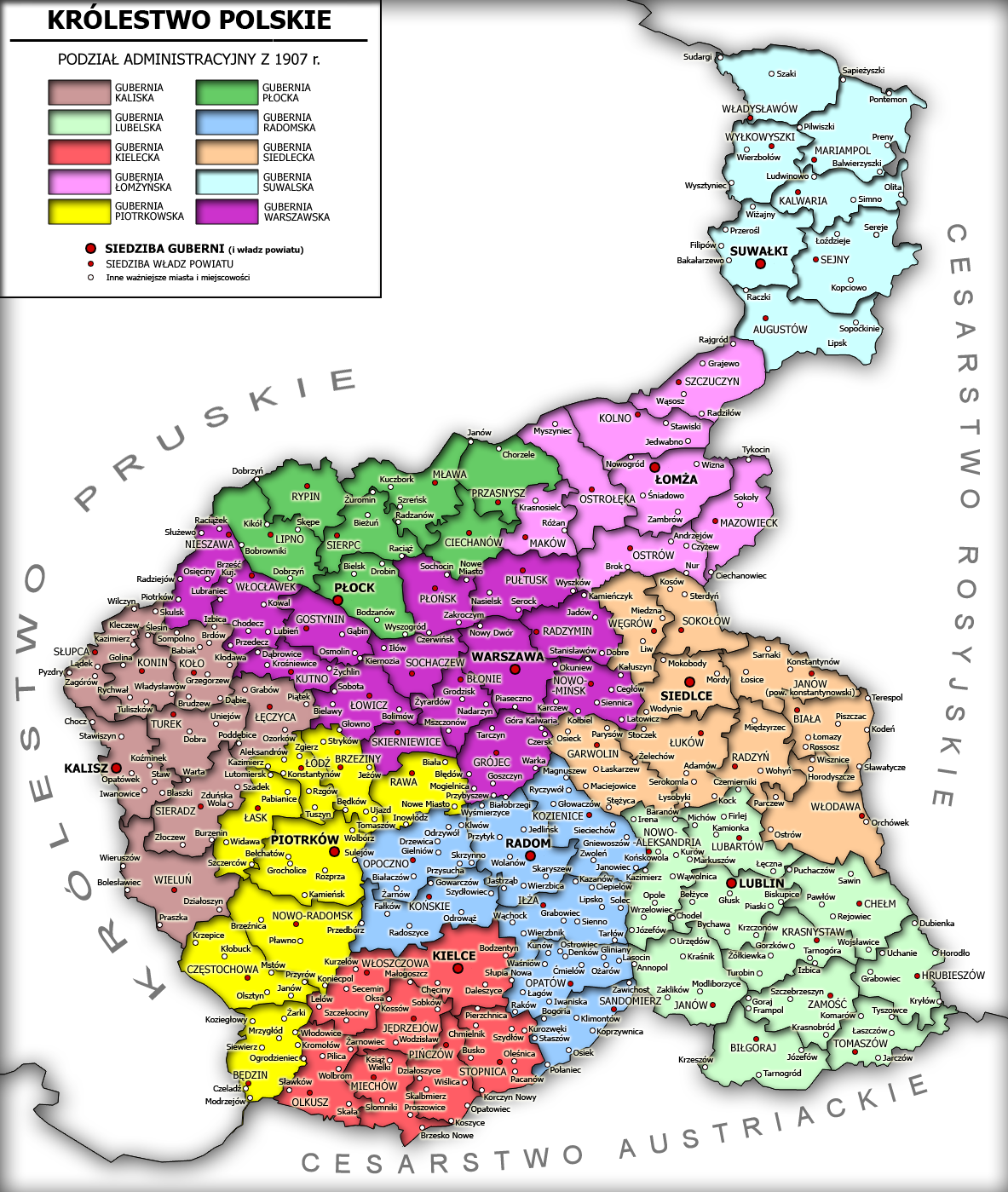
Map of Poland, 1907, Szczuczyn is near Lomza


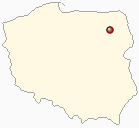
Szczuczyn is the red dot on this map of Poland


Szczuczyn, Poland was the home of the Monkovskis, the family of my husbands maternal grandparents.  It is an old market town, first mentioned in the fifteenth century.  In 1900, the population was about 3000, and 58% were Jews, most of them were traders and craftsmen.  An independent Jewish community was established in 1820 with a synagogue and Bet Midrash (House  of Study). The Jewish community of Szczcuzyn was destroyed in the Holocaust.  Many of the former residents have written memoirs of their town and its vibrant culture. 

Most of the Monkovski family left Szczcuzyn at the beginning of the twentieth century, emigrating to the United States and Israel, those who remained perished in the Holocaust.
I am including information about life in Szczuczyn from the memoirs of the former residents,  written after World War II, since the Monkovski's who lived there are no longer with us.

"Not far from the then German border lies the shtetl, Shtutsin [Szczuczyn]....  Jews there were engaged mainly in commerce and trade.  All businesses were Jewish. Only a few were of Christian proprietorship.  Two days in a week were market days: Tuesdays and Fridays.  The peasants came to these fairs with their products...and sold them to the Jews.  With the money they received, the peasants would buy from the Jews: clothes, drink and the like.  Life went on in this manner until Hitler came to power.  Anti-Semitism grew stronger and commerce was taken out of Jewish hands....Before anti-Semitism infested the shtetl, Jews had felt like their own masters....Everything had been open to the Jews: City hall, government institutions and all other offices." (Yeshiah Skubelski, from The Destruction of the Community of Szczuczyn, Tel Aviv, Israel, 1954)

Market Days in a Polish Shtetl

Itzhak Wertman writes in his memoir, From the Inferno, Back to Life, about his home in Szczuczyn in the 1920's.  "Economically, we weren't very rich, but also not poor.  We lived in a rented house next to the shop.  It had two rooms and a kitchen, and the bathroom was in the yard.  The living conditions in those days demanded a lot of work: we used to draw the bath water...from a well in the yard.  A Gentile woman brought our drinking water from the river....  We heated the house with a porcelain stove, which stood between the two rooms, and a lit a fire in it using wood and peat (and later by coal). The was a stove for cooking in the kitchen that we also lit with wood and peat.
As children, we used to play different games: we made balls from various rags and played with them or with a hoop that we rolled on the ground with a wire.  In the winter, when we studied at night, we used to make lanterns for ourselves.  (From the Inferno Back to Life pp. 3-19)

Wertman describes how his family celebrated the Sabbath:  "We always received the Sabbath with special preparations:  my mother cleaned the house for the Sabbath, made challot [Sabbath bread] and cakes every Thursday night, and on Friday took them to the bakery to bake them.  She also used to bring the cholent [a meat stew] that she made to the bakery.  On Sabbath morning, like all the other Jews in the city, we took the cholent home for our Sabbath meal.
Shortly before the entrance of the Sabbath, the Synagogue's dayan walked between the shops in the city and announced that it was time to close the shops for the approaching Sabbath.  All the city's Jews--men, women and children-gathered in the synagogue for the Sabbath prayer. [After the services, the family returned home for a festive meal] After the meal, every Friday night and also on the Sabbath, we wore our best clothes and went for a stroll in the city's main street." (pp. 3-19)


Scczuzyn, Poland


Chiam Monkovski's family, dressed in their best clothes, ready to celebrate the Sabbath in Szczuczyn. Chiam Monkovski was my husband's great Uncle.


Friday, July 19, 2013

Two Mysteries (The Genealogy Kind) Solved

Genealogy research is like solving a puzzle.  You have most of the pieces but you just can't find that one missing piece to complete the puzzle. There are plenty of mysteries in my family trees, most unsolved, but happily, I did find that missing piece for two of them.


The Mystery of the Sashes.
Katherine Rychly and Olexa Pylatuik

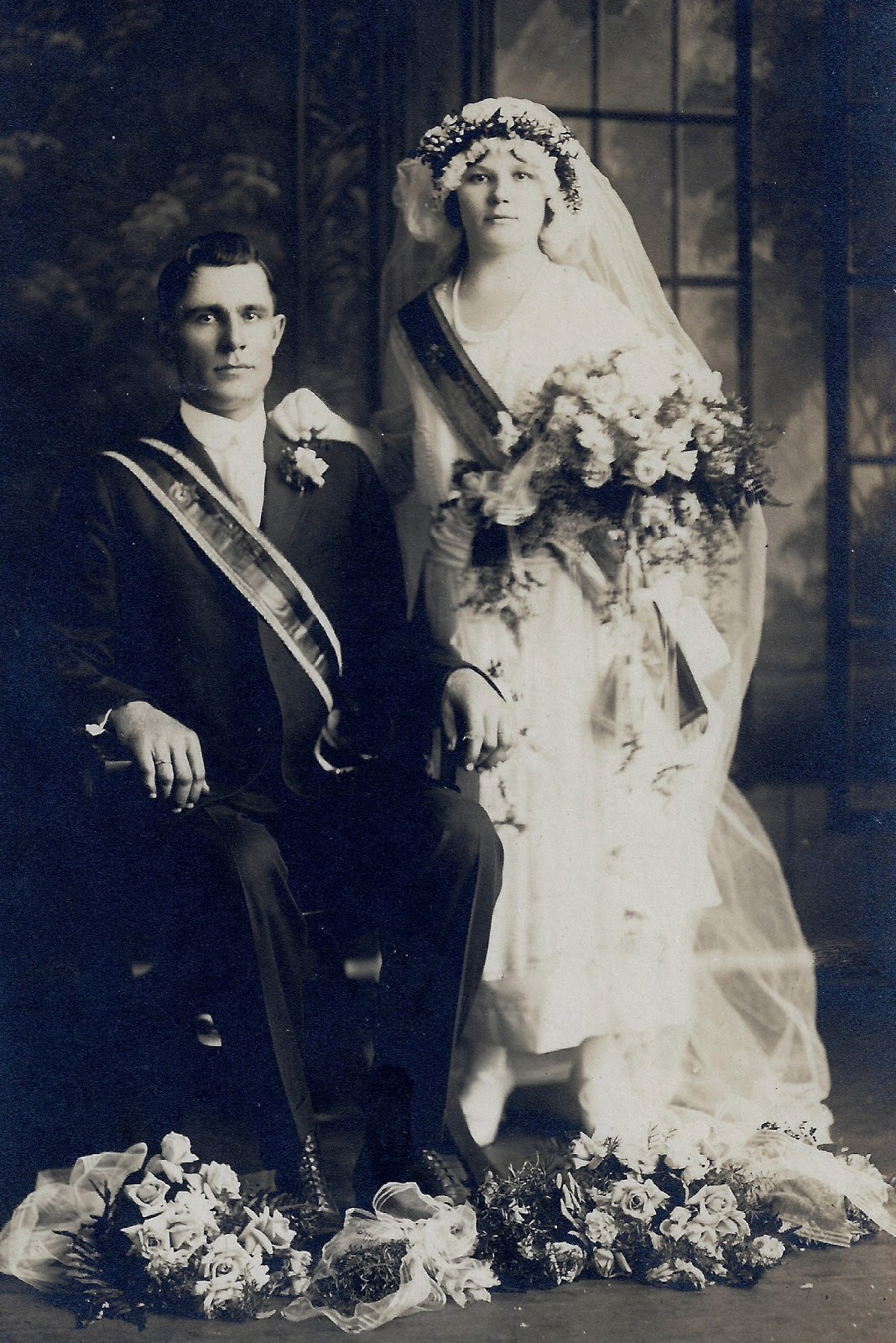
The wedding picture of my great aunt Katherine Rychly and Olexa Pylituik contained a mystery.  As you can see in the picture, they were wearing sashes with their wedding attire.  I asked their daughter, if she could tell me about the sashes, and she said that she was wondering about them herself. 
When I was going through boxes of old stuff, I found a picture of my grandfather John Koshuba, and his brother, Joseph Koshuba, both rearing a uniform with the same sash.  The answer came from  a reader of this blog, who send me an link to the University of Minnesota Media Archive--Connecting Our Collections With Yours.  The sashes were worn by members of a Ukrainian Society, The Zaporozs"ka Sich in Minneapolis Minnesota. 

Peter Wons, Joseph Koshuba, John Koshuba


Zaporozs'ka Sich Society 1914


 The Mystery of the Grandmother's Name


This a portrait of my husband's great grandmother.  It came to me in a box of old pictures from my mother-in-law, Lillian Gerstein after she died.  My sister-in-law had it and when she moved, she gave it to me.  My mother-in-law told me that her mother's name was "Bellie", so I wrote it as Bella, or Belle.  I was never sure that it was her correct name.  The light went on in my head when I was looking through old family pictures from the Gerstein family.   My husband's great aunt's first name was Beile.  Perhaps the woman in the portrait was really Beile.  In my research for this blog, I came across a site for the town of Szczuzcyn, Poland, where my husband's ancestors once lived.  I contacted the site administrator and found out that the mysterious woman was Bejla Pienanzek, who married Wolf Berek (Velvil) Monkowski, and was the mother of my husband's grandmother, Rose. 
To connect with the Szczyczyn Site mentioned here: