Friday, September 27, 2013

My Mother's St Paul

Minnesota State Capital Building, St Paul Minnesota
Juia Koshuba's High School Yearbook Picture
First National Bank of St Paul.
  

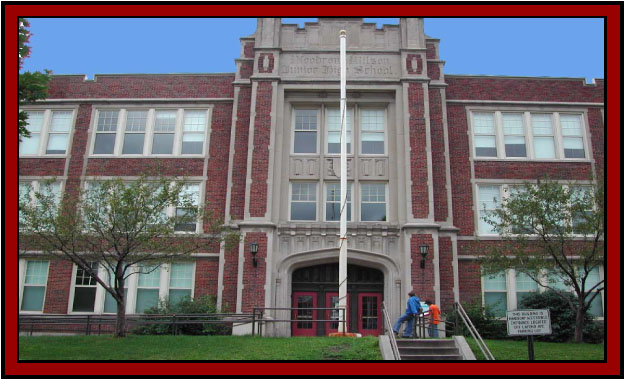
Wilson High School, formerly Wilson Junior High.
St Paul Public Library--my mother could get there on roller skates.
Montgomery Ward
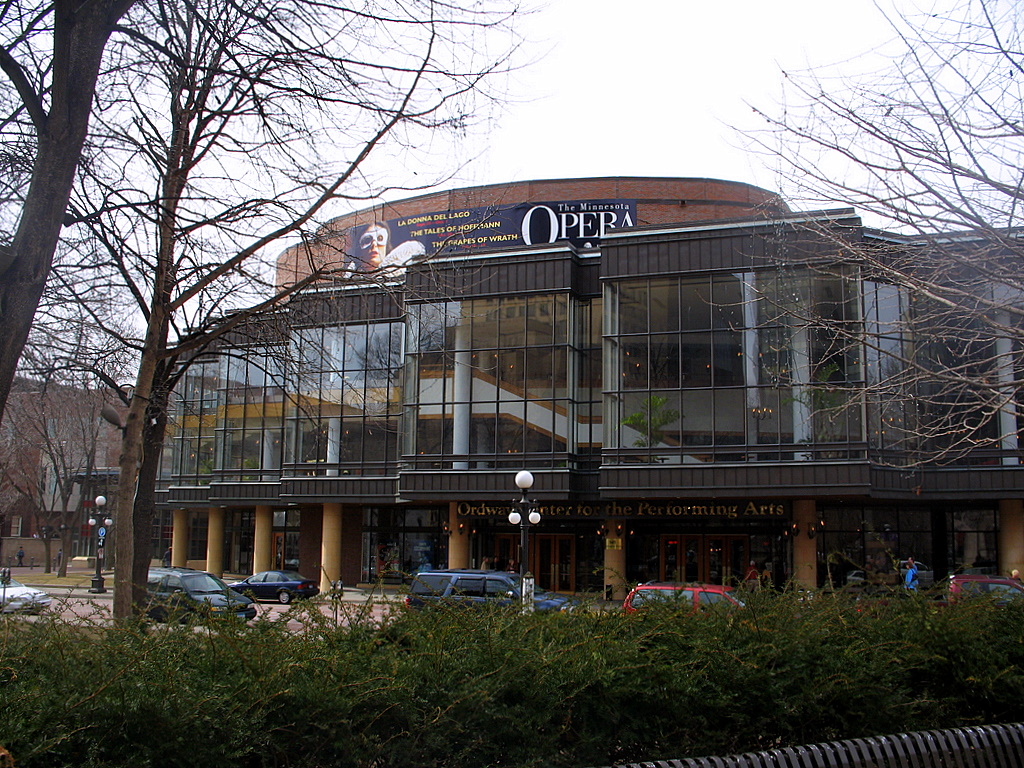
The Ordway Theater,


My mother, Julia Koshuba Noznick, grew up in St Paul Minnesota in the 1920's and 1930's. She lived on Sherburne Ave, not too far from Downtown St Paul--in fact she and her brothers could roller skate there.  Her father, John, owned Expert Window Washing Company in the 1920's and one of his clients was the First National Bank of St Paul.  She attended Drew Elementary School, Wilson Junior High, now Wilson High School and graduated Mechanic Arts High School in 1937.  Both Drew School and Mechanic Arts High School have been torn down.  Her first job was working as a typist at Montgomery Wards, typing up catalog orders,  Speed was highly valued at that job.  Later she worked  at Family Service, a social agency as a secretary. It was located on Court House Square, where the Ordway Theater stands today.  The St Paul Public Library, one of her favorite places, was across the street.

Friday, September 20, 2013

ZARVANYTSIA, UKRAINE

Icon of the Mother of God
The Church of the Nativity of The Mother of God and bell tower in Zarvanytsia.
I have posted  a UTube video of the Shrine at Zarvarnytsia.  It includes the Church, the icon, the area and the spring.  It is in a separate blog post, which you can find on my blog.

Zarvanytsia was the birthplace of my grandmother, Marya Klak.  It is a small village of about 300 people,located on the Strypa River, about 30 miles southwest of Ternopil', Ukraine.  In spite of its small size, it is a very important place for Ukrainians of the Ukrainian Catholic Church.  Varvanytsia is visited by hundreds of thousands of Ukrainian Catholics every year, who come to see the Icon of the Virgin Mary and drink water from its spring, which is said to have miraculous powers.
I had heard of this town from my father, who said that there was a special spring, that was filled in when Ukraine was part of the Soviet Union.  I really didn't realize that it was famous and important until I met someone who had visited there recently.  Then I did some research, and realized how important this place is to  the Ukrainian people.  The story of the founding of  Zarvanytsia started in the 13th century.

In 1240, a monk left Kiev, because of a Mongol invasion.  He stopped near the Strypa River, since he was injured, drank the water of the spring, fell asleep and saw a vision of the Mother of God, The Virgin Mary.   When he woke up, his injuries were healed, and he found the icon nearby.  He decided to stay and build a chapel to house the icon.  As people heard about the miraculous powers of spring, and the icon, a duke came there and was healed , and in thanks, built a monastery there.  Eventually a town grew up there, and although there were invasions by the Turks, the icon survived, and another church was built.  The fourth church,  Holy Trinity, built in 1754 of stone, survives today.  My Grandmother must have been familiar with this church. I have tried to include a picture of this church, but since I can't read Ukrainian, I wasn't sure of the names of the many church photos that I found, so that will have to appear another time.

Old wooden church in Zarvanytsia


During World War I, the church and monastery was damaged, but was rebuilt in 1922.  When the Soviets took over Western Ukraine in 1939, the monastery was destroyed and the became a warehouse and the spring was filled in and used as a dump.  Like the people of Poland,  the people of Zarvanytsia kept their faith alive by going underground, holding services in private homes or in the surrounding forests.  The icon was hidden and survived World War I, World War II and the Soviet rule of Ukraine.
In 1991, when Ukraine declared its independence from the Soviet Union, the church was repaired, the chapel at the spring was rebuilt, and the spring was usable again.  A new and much larger church was built, and the monastery was reopened.   A new church, The Nativity of the Mother Of God was build as well.  
Zarvanytsia is a destination for Ukrainian pilgrims from around the world.  Most of the new buildings  were paid for by donations Ukrainians who live in countries around the world.


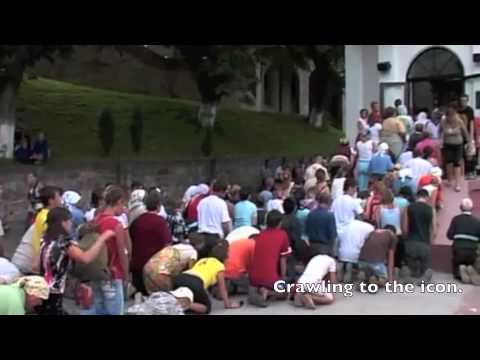
Pilgrims on their knees, approaching the Church and the icon.

The Icon of the Mother of God, notice the chains and medals on either side of the icon, which were left by pilgrim and others who were healed.


Zarvanytsia. Sobor of the Mother of God


Saturday, September 14, 2013

THE KOSHUBA BROTHERS

Unlike many immigrants from Eastern Europe in the early 20th century, my grandfather John Koshuba,  and great uncles, Joseph and Stephen Koshuba, were businessmen.  Born in the village of Ouzurnaya, Galicia, Austria, they were the sons of Feodor Koshuba and Maria Kleviak.  I have no idea what Feodor did for a living, but I have heard family stories that they were a town family.  

John Koshuba and Family, Stephen and Helen Koshuba (standing)1925

Joseph Koshuba 1916


John was born in 1880, Joseph in 1885 and Stephen in 1899.  There were three other children, Teckla, Anna and Michael, but that is story for another time.
Joseph came to the United States first, according to the 1910 census, in 1904.  John came next, possibly in 1908 (1910 census) and Stephen in 1914 (immigration records). 
The first records I could find of the older brothers were the 1910 US Census.  John was living in Peabody, MA, with this sister and brother-in-law, Teckla and Peter Wons, their two children, and was employed as a baker.
Joseph was in St Paul, Minnesota, living in a rooming house and was doing general work. Family stories said that John also lived in Grand Rapids Michigan, and was apprenticed to a tailor.
The next mention I find of Joseph and John was in 1912, in the St Paul City Directory.  Joseph was the manager of the National Window Cleaning Company, located on 408 St. Peter St, St Paul; John was also employed there as a foreman. 
Joseph married Florence Holmberg in 1913.  In the 1914 St Paul Directory,  Joseph and Florence were living at 491 Topping St, St Paul. John was still working for Joseph.
In 1915, Joseph was the owner and manager of two companies, National Window Cleaning Company and  National Sanitary While Washing Company, both located at 314 People's Bank Building.  He was doing well enough to have two advertisements in the Directory, a telephone, and stated in the ad that whitewashing could be done by either brush or machine.
In 1916, John is listed as a saloon keeper,  located at 751 Wabasha St, St Paul. In the St Paul City Council minutes,  there was a transfer of a licence to sell liquor to Joseph, recorded on June 12, 1916.  However, on October 21, 1916, the license is transferred again, from Joseph to Onefec Blalys.  In November, 1916, John married my grandmother, Pauline Rychly. 
In 1918, when he registered for the World War I draft,  John was in business for himself.  He started the Expert Window Cleaning Company at 458 Jackson St, St Paul, in competition with his brother Joseph.   At that time, Stephen was working for Joseph as a window cleaner. 
Joseph died suddenly of heart disease in January 1919, at the age of 33.  His business was sold, although his family continued to live at 886 Central, for the next 10 years.

 In 1923, Stephen was working at the Union News Agency and continued to live on Curtice St. He married Helen Rychly (yes, she was my grandmother's sister) in 1924, and moved to 152 Charles St.  He was back in the window washing business, working for John.

John and Stephen went into business together in 1934, and started Stephen's Buffet on Robert Street in downtown St Paul.  Although they sold the restaurant in 1939, it continued in business until the 1960's, under several different names.  It had a bar in the front, and a restaurant behind the bar.  According to my grandmother, the one thing that John didn't know when he started the business, was that she planned to work there.  On the first day she showed up with her apron and went to work in the kitchen, waited on tables and tended the bar, if necessary.  Since the restaurant was in downtown St Paul it served businessmen and people working in the retails stores nearby. I had lunch there in the 1960's with my mother and grandmother, and was surprised  that one of the waitresses who had worked for them in the 30's was still working there!  John sold Expert Window Washing Company  to National Window Washing Company, his brother's old business, when he went into the restaurant business.  Stephen continued to work for them as a window cleaner. 

In 1937, Stephen went into business with Victor Schlaff , and started Stephen's Bar, at 425 Jackson Street in St Paul.  They also owned a hotel that served mainly men working on the railroad. He continued to work as a partner at Stephen's Buffet for the next few years.
In 1939, the brothers sold Stephens's Buffet and Stephen and John ended their partnership.  John was at a loss without his business, and he committed suicide in March of 1940.
Stephen stayed in the bar and hotel business, and sold life insurance on the side.  He continued as a successful businessman in the Twin Cities  until he moved to Colorado in the 1970's.  He purchased a liquor store in Golden, Colorado, which he owned until he retired.  He died in 1982.

These tokens were issued to John Koshuba, which gave him a license to sell liquor. I noticed that the address was 751 Wabasha, which is interesting since the restaurant and bar was on Robert Street.


Obverse Image TC-151414: JOHN KOSHUBA, / 751 / WABASHA / ST. / ST. PAUL, MINN.
Reverse Image TC-151414: 2½


Saint Paul, Minnesota (Ramsey County), U.S.A.
Obverse Thumbnail Image: JOHN KOSHUBA, / 751 / WABASHA / ST. / ST. PAUL, MINN.Reverse Thumbnail Image: 2½


A S12 26
JOHN KOSHUBA, / 751 / WABASHA / ST. / ST. PAUL, MINN.
TC-151414 *** Koshuba Bros. Restaurant & Tavern 1934-1939
Contributed by: wlrotz


Monday, September 2, 2013

Labor Day in China

Today, the first Monday in September, is Labor Day in the United States.  We celebrate it by relaxing or traveling.  When I was growing up, the day after Labor Day was the first day of school.  Now, most children are in school for at least a week before Labor Day. In many parts of the world, Labor Day is celebrated on the first of May.  I was lucky enough to be in Beijing, China, for the Labor Day Holiday. 


Tienanmen Square, Beijing.
I expected to see big parades in Beijing, but I was told that those are held on the National Holiday in October.  For Labor Day, the Chinese travel.  It seemed that most of them decided to visit Beijing. Tienanmen Square was decorated with flags and flowers.  There were huge plantings of colorful flowers, all in pots, which could be removed after the holiday.  There was a jumbotron screen in the square, which had a lot of pictures of the Olympics and a huge portrait of Sun Yat-Sen, the founder of modern China.  


The Forbidden City
The only sign of a holiday in The Forbidden City was  the huge crowd of people.  The former palace of the Emperors was wall to wall people. 


The Great Wall of China
On the way to the Great Wall, we saw a long, and I mean long line of people waiting for a bus that would take them to see the Great Wall.  The area we visited, Badaling, was also very crowded.  We met a nice family, who wanted us to take their picture, which we did.


The Summer Palace
This palace of the Emperors is very beautiful, but it was so crowded that we really didn't appreciate what there was to see there.  We did get to ride in a Dragon Boat.


The Temple of Heaven
The Temple of Heaven was also crowded, but since it was early in the day, it didn't seem too bad.  The park next to the Temple of Heaven was  crowded with people enjoying themselves.


My conclusion--the Chinese observances of Labor Day are very similar to American ones.

Friday, August 30, 2013

THE GENEALOGY OF MARYA KLAK


Marya Klak, my paternal grandmother, wasa born in Zarvanytsia, Ukraine in 1889, the daughter of Joseph Klak and Anna Domerecka.  She had two brothers, Ivan and Andrij, and one sister, name unknown.  According to my father, Peter Noznick,  both her parents died when she was young, leaving the children orphans.   She was twenty-two when she came to the United States, her passage paid for by her brother.  My father said that since her family was so poor, her chances of marriage were unlikely.  She left Zarvanytsia in March of 1911, and sailed from Hamburg, Germany to New York, arriving on April 9, 1911.  As the ship neared New York Harbor, the steerage passengers came on the deck and watched for the Statue of Liberty. When the Statue came into view, the passengers fell on their knees and thanked God that they were in America.

Marya Klak, between 1911-1914
Marya went to live with her sister and brother-in-law, on Houston Street, in New York City.  She worked as a live-in maid for a family who lived on Riverside Drive.  They story my father told me was that her employer was a famous actress, but I can't remember her name.

Marya Klak and John Nyznyk, November 11, 1914


She married John Nyznyk on November 11, 1914, in St. George Ukrainian Catholic Church, in New York City.  Although Marya was Polish, her husband was Ukrainian.  He was a harness maker, and according to family stories, served in the Austrian Army.  He also was a widower, and father of two children, Paul and Michelina, who were living in his home town of Pomorzany.  My father, Peter Paul, was born August 18, 1915 in Bellvue Hospital.   At the time, Marya and John were living on East 92nd Street in New York City. 

Shortly after Peter's birth, John and Marya separated. I haven't found any records of where Marya and Peter lived during this time, but I have to assume that they lived with members of her family in New York City.  My father  told me that his mother found a day nursery where working mother could leave their children, and enrolled him there. Later, she enrolled him in a school operated by the Children's Aid Society of New York, where he attended until the fourth grade. Marya worked several jobs, including a summer as a cook for a children's camp in upstate New York.  My father stayed with a family in the area and he remembers their collie dog fondly.

Peter Noznick in Central Park NYC 1920's

Peter Noznick 1917


Sometime between 1915 and 1920, Marya met and married Peter Zackowski, another Polish immigrant.  The family lived on Ave C across from the Eagle Pencil Factory. There was a fire station nearby and the horse drawn steam fire engines terrified my father.  They moved to 624 East Eleventh St, between Avenue B and C, and lived there until they moved to Connecticut. They worked several jobs and saved every penny until they had enough money to buy a farm in Windham Connecticut in 1930.  Moving to an old colonial house was a big change for Marya, she had never lived in a house that large in her life.  She wall-papered every room and furnished it with pieces from area farm sales.
Sometime during these years, she became known as Mary.


The Farm in Windham Connecticut, 1940's


Marya lived in Connecticut for the rest of her life.  She missed living in New York and having her friends and family nearby.  She did see them regularly, since they came to the farm for visits almost every summer.  They called her "Choch" which was a shorted form of auntie in Polish.  Marya and Peter ran a dairy farm until the late 1950's, when electric milking machine became the norm.  They continued to sell milk, eggs and hay into the 1960's.  Her son, Peter had three children, Pauline, Peter and Andrew, who spent many summers at the farm.  There was plenty to do there, even through there was no TV. There wan an old radio and an old Victrola record player, which required cranking to operate, as well as 100 acres of farmland and woods to explore.

Mary and her cows, Windham Center Connecticut 1960's

Mary Zackowski, Peter, Julia, Pauline and Peter Noznick 1949


Peter  Zackowski died in 1963. Shortly after his death, some friends brought Mary a puppy, who she named Skipper,  he was her companion for the last years of her life.  Mary died in 1969, a few weeks before the Astronauts landed on the moon. Peter and Mary Zackowski are buried in the Windham Center Cemetery, next to son and daughter-in-law Peter and Julia Noznick.  

Friday, August 23, 2013

I Say Shtutchin, You Say Szczuczyn......

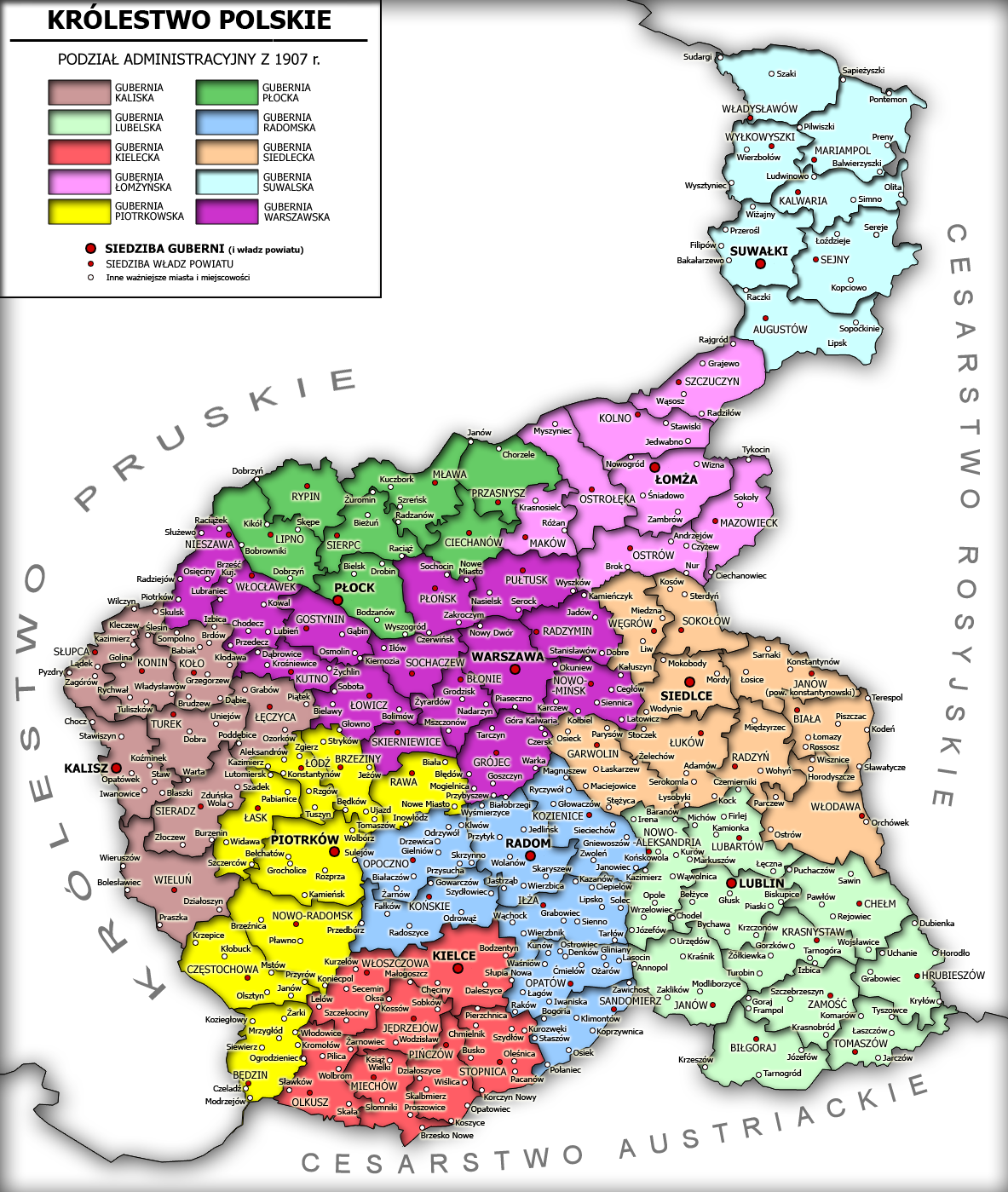
Map of Poland, 1907, Szczuczyn is near Lomza


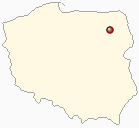
Szczuczyn is the red dot on this map of Poland


Szczuczyn, Poland was the home of the Monkovskis, the family of my husbands maternal grandparents.  It is an old market town, first mentioned in the fifteenth century.  In 1900, the population was about 3000, and 58% were Jews, most of them were traders and craftsmen.  An independent Jewish community was established in 1820 with a synagogue and Bet Midrash (House  of Study). The Jewish community of Szczcuzyn was destroyed in the Holocaust.  Many of the former residents have written memoirs of their town and its vibrant culture. 

Most of the Monkovski family left Szczcuzyn at the beginning of the twentieth century, emigrating to the United States and Israel, those who remained perished in the Holocaust.
I am including information about life in Szczuczyn from the memoirs of the former residents,  written after World War II, since the Monkovski's who lived there are no longer with us.

"Not far from the then German border lies the shtetl, Shtutsin [Szczuczyn]....  Jews there were engaged mainly in commerce and trade.  All businesses were Jewish. Only a few were of Christian proprietorship.  Two days in a week were market days: Tuesdays and Fridays.  The peasants came to these fairs with their products...and sold them to the Jews.  With the money they received, the peasants would buy from the Jews: clothes, drink and the like.  Life went on in this manner until Hitler came to power.  Anti-Semitism grew stronger and commerce was taken out of Jewish hands....Before anti-Semitism infested the shtetl, Jews had felt like their own masters....Everything had been open to the Jews: City hall, government institutions and all other offices." (Yeshiah Skubelski, from The Destruction of the Community of Szczuczyn, Tel Aviv, Israel, 1954)

Market Days in a Polish Shtetl

Itzhak Wertman writes in his memoir, From the Inferno, Back to Life, about his home in Szczuczyn in the 1920's.  "Economically, we weren't very rich, but also not poor.  We lived in a rented house next to the shop.  It had two rooms and a kitchen, and the bathroom was in the yard.  The living conditions in those days demanded a lot of work: we used to draw the bath water...from a well in the yard.  A Gentile woman brought our drinking water from the river....  We heated the house with a porcelain stove, which stood between the two rooms, and a lit a fire in it using wood and peat (and later by coal). The was a stove for cooking in the kitchen that we also lit with wood and peat.
As children, we used to play different games: we made balls from various rags and played with them or with a hoop that we rolled on the ground with a wire.  In the winter, when we studied at night, we used to make lanterns for ourselves.  (From the Inferno Back to Life pp. 3-19)

Wertman describes how his family celebrated the Sabbath:  "We always received the Sabbath with special preparations:  my mother cleaned the house for the Sabbath, made challot [Sabbath bread] and cakes every Thursday night, and on Friday took them to the bakery to bake them.  She also used to bring the cholent [a meat stew] that she made to the bakery.  On Sabbath morning, like all the other Jews in the city, we took the cholent home for our Sabbath meal.
Shortly before the entrance of the Sabbath, the Synagogue's dayan walked between the shops in the city and announced that it was time to close the shops for the approaching Sabbath.  All the city's Jews--men, women and children-gathered in the synagogue for the Sabbath prayer. [After the services, the family returned home for a festive meal] After the meal, every Friday night and also on the Sabbath, we wore our best clothes and went for a stroll in the city's main street." (pp. 3-19)


Scczuzyn, Poland


Chiam Monkovski's family, dressed in their best clothes, ready to celebrate the Sabbath in Szczuczyn. Chiam Monkovski was my husband's great Uncle.